Ustad Chotey Ghulam Ali Khan (The Pride of Kasure Gharan as a Classical Vocalist)
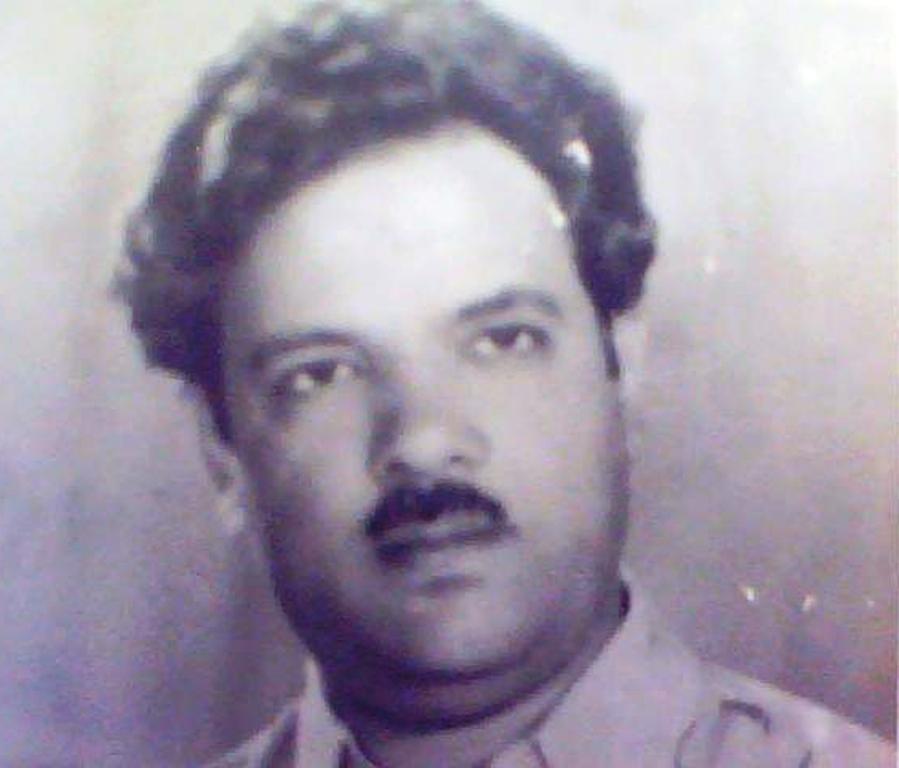
IntroductionPakistani Classical MusicClassical music of the Indian subcontinent is based on two central principles, ‘sur’ (musical note) and ‘lai’ (rhythm). The systematic organisation of musical notes into a scale is known as a ‘raag’. Each raag is distinguished from the other by a variety of features including the number of notes it consists of, the ascent and descent of the scale, and special emphasis on particular notes. Music is heavily dependent on feeling and emotion and Indian classical music is no different. Each individual raag has its own character and personality, in order for the true feeling or ethos to be conveyed to the listener, a particular time is ascribed to each raag whilst some raags are even suited to a particular season. The arrangement of rhythm (lai) in a cycle is known as ‘taal’. Each composition is set to a rhythmic cycle, the first beat of each rhythm cycle is known as the 'sum' and great stress is placed upon it. Over the years, the importance of the rhythm accompanists has increased and they are encouraged to improvise and undertake short solo pieces during the performance. The main rhythm instrument used for accompaniment is the tabla. The likes of Ustad Ahmedjan Thirakwa, Ustad Alla Rakha and his genius son, Ustad Zakir Hussain have been responsible for transforming the tabla into a popular solo instrument. Improvisation plays a major role during a performance. The success of a performance depends on how creative and imaginative the performing artiste is. The artiste has to continuously develop and improvise the performance and yet be careful that the overall mood and structure of the performance is not spoilt. A competent vocalist will always make sure that the correct structure of the raag is maintained whilst improvising in order to retain the purity of the scale. The major genres of classical music in the sub-continent are dhrupad and khayal. Dhrupad is sadly approaching extinction in Pakistan despite the tenacity of vocalists Ustad Hafeez Khan and Ustad Afzal Khan who have managed to keep this art form alive. Khayal is by far the most popular genre of classical music in North India and Pakistan. The majority of classical musicians are from hereditary families and belong to a 'gharana'. A gharana can be considered to be a school of thought by which a musical style is preserved, taught and propagated to subsequent generations. A gharana’s success depends on how strongly it retains its distinct style, repertoire and techniques whilst incorporating fresh ideas without altering the authenticity. The gharanas flourished during the rule of nawabs and maharajahs who actively patronised the arts. The major gharanas of khayal are Qawwal Baccha, Kasure, Gwalior, Agra, Kirana, Rampur, Patiala, Delhi, Kirana and Shamchaurasi. The gharana system and indeed classical music are in a process of decay in Pakistan. The lack of patronage and the decline of hereditary musicians taking up classical music has led to classical music becoming a static art form. The situation in neighboring India is faring better, mainly because of active promotion of classical music to the masses. Over the years this has resulted in a growing number of musicians from educated and prominently middle class backgrounds outnumbering hereditary musicians as professional musicians. We are here basically to do'nt forgett the Legends of Classical Music just Like Ustad Chotey Ghulam Ali Khan (The Pride Of Kasure Gharana). There is some historical information about him. By Ustad Ghulam Haider Khan: " All Childhood memories are unreliable. But some incidents from those early years are etched into your memory with sudden force, so that they loom all the more Largely in your later years. We were living in Kasure and I was a student of class 3. My grandma told me that my father was attending a soiree of classical music at the residence of Munni bai (A songstress of some repute, she has vanished from our collective memory). Munni bai's house was very close to ours. When i entered it I felt a thunder-like sensation that frightened me terribly, so teribbly infact that it stilled me into a state of motionless silence at the gate. When i recovered my senses i realize that i had heard a "Taan", a flight of notes, in the voice of Ustad Chotey Ghulam Ali Khan, who was performing inside the house. He was born in 1910 at Kasure in a family of profesional musicians. He studied music with Ustad Chhajjoo khan (later his father-in-law) and Ustad Mian Buddey Khan (a disciple of the Dehli-based Qawwal Bacha clan) and other elders of what was then already being called "Kasure Gharana" of singing. Ustad Chotey Ghulam Ali Khan began to sing on the radio mike soon after its advent in the subcontinent. No music conference was complete without him in those years. And what a sensation he proved to be: a Kasuri lad roaming the whole of undivided India, conquering it wherever he went: Amritsar, Lahore, Dehli, Banaras, Calcutta, Bombay. In singing compititions he defeated Ustad Amanat (Nephew of Ustad Rajab Ali of Devas State) matched the legendary Ustad Amir Khan of Indore, and became the first and only vocalist from Punjab to take on the untamed Ustad Tawwakkal Hussain, the man whose musical genius live on in Pakistan in the hundreds of melodies composed by his great disciple, the music director Khawaja Khursheed Anwar. Behind the singing sensation called Ustad Chotey Ghulam Ali Khan, however, is a rather ordinary and often poignant story of universal appeal. In the early 20th century the elder musicians of Kasure were insulted when their great kinsmen Ali Bakhsh Khan and Kaaley Khan, both brothers, publicly became shaagirds of Ustad Fateh Ali Khan Karnail of the patiala gharana. This started a rivalry between the two gharanas, with the Kasuris seeking revenge. To obtain that revenge they raised a boy called Ghulam Ali, whom they were preparing to tackle none other than the famous Ustad Ashiq Ali Khan, son of Fateh Ali Karnail. The boy Ghulam Ali sometimes had to run three miles a day with bricks in his hands this was only one exercise to ensure that his stamina reached the range required to vanquish the greatest singers of the land. And he would practice his singing rigorously, sometimes for nine hours a day. The elders of Kasure were giving special attention to the lad's "Taan", the repid combination of several notes up and down a scale , which was in those days a widely accepted marker of good and able voices. As if to drive home the point, the lad even came to be called Ustad Chotey Ghulam Ali Khan, a seemingly humble title that nevertheless begged a comparison with the son of one of the original defectors, a man who was already being called Ustad Bade Ghulam Ali Khan. After a practice of three hard years, the time came to show his skills. It happened at a concert on Karachi's Napier Road. The manly and somewhat sinister Raag "Marva" was proposed, a rendition each by Bade Ghulam Ali Khan and Chotey Ghulam Ali Khan. The latter started first. In his own words: " I started my item which spanned four hours. During the performance, it began to thunder and rain. While singing every thunder-clap provoked me to reproduce it in my song. Idid this and came on the samm, and received roars of applause from the audience." This telling is corroborated by several musicians who were present at the event. According to some of them, Ustad Bade Ghulam Ali Khan attempted to sing the same Raag after Ustad Chotey Ghulam Ali Khan had finished, But came to a stop after some minuts: "Mera Mood nahi bann raha" he is reported to have said. And on another occasion Ustad Chotey Ghulam Ali Khan came face to face with Ashiq Ali Khan, the son of that man who had stolen his elders' disciples from the Kasure Gharana. This event occurred in Amritsar. In those days Ashiq Ali Khan was at the height of his power, and was in great demand all over the undivided Indiafor his rapid, eccentric Taans. It is said that Ustad Chotey Ghulam Ali Khan, upon his arrival in Amritsar, threw a challenge to Ashiq Ali Khan (Just as Kasuri elders had planned) and sang the tender-sharp morning raag "Gujri Todi" for four consecutive hours. When his turn came, Ustad Ashiq Ali Khan ventured to sing raag "Pooriya Dhanaasri" a well-wom weapon of his, but his rendition became insipid because of the rhythmic miscalculation. This was embarrassing for the Great Ustad, and so the next day was chosen for an other round of competitive singing. This time Ashiq Ali Khan brought with him Bade Ghulam Ali Khan, who had been urgently summoned from Lahore just to make sure that the right "side" won the match. But even here Usatad Chotey Ghulam Ali Khan held his own, and his "Marva" is said to have devastated the collaborative effort of the two rival ustads. To see a great artist in his prime is an instant pleasure to look at him in retrospect, as a vehicle in the course of his life, stimulates a whole other set of emotions. Sometimes in his youth Usatad Chotey Ghulam Ali Khan was assailed by arthritis. This was so severe that it caused his speech to suffer and gave him a slight stutter that he was to have for the rest of his life. Consequently he emphasized the "Taan" in his singing and avoided the long, stable notes. This also why he never used "Sargam (Sa Re Ga Ma Pa pattern that now adorn every raag and qawwali performance)" in his singing. He even avoided "Tarana Gayiki" for this reason. On the other hand, he developed a knack for the lighter forms of singing such as Ghazal, Thumrii and Daadra and became an accomplished "SOZ-khawaan" at Muharram ceremonies. So powerful and miving was his "Soz-Khawani", In fact, that it was even acknowledged in Lucknow, the home of the North-India Shia aristocracy. The "Marsiya" of "Mir Anees" and "Mirza Dabbeer" were among his favourites. Always clad in "Kurta-Paijama" and "Sherwaani". Ustad Chotey Ghulam Ali Khan was a sophisticated and well-mannered man. He was handsome, stout and healthy-looking, and he remained free of any scandal, though there was one attempt to link him romantically with "Akhtaribai Faizabadi" a story that is now believed to be false. In fact Ustad Chotey Ghulam Ali Khan was a great teacher of women singers his pupils include "Meena Lodhi, Shahida Parween, Robina Mustafa, Samina Sayyed and Sara Zaman". Even "Muhammad Rafi", originally from Lahore and latterly of the Indian film industry, benefited from his teaching. Toward the end of his life Ustad Chotey Ghulam Ali Khan joined the "Al-hamra Arts Council" in Lahore. In 1985 the Government of Pakistan awarded him "The Pride of Performance" medal. The next year he died, and was buried at Lahore's "Miani-sahib Graveyard" By Ustad Ghulam Hussain khan (Lives in Lahore) PerformancesHe went: Amritsar, Lahore, Dehli, Banaras, Calcutta, Bombay. In singing competitions. The Awarded with the "Pride of Performance Award" Pakistan's Biggest Award.....in 1985. ApproachIf you want to Know more about Ustad Chotey Ghulam Ali Khan, you can contact his grandson Muzahir Ali Jaffry (Lahore, Pakistan) Contact on these following #s: +923004982287 +923464000511 Information Collected By:The Grandson of Ustad Chotey Ghulam Ali Khan Muzahir Ali Jaffry |
Lahore, Pakistan Lahore, Pakistan, Lahore, Punjab | +923464000511 |


